
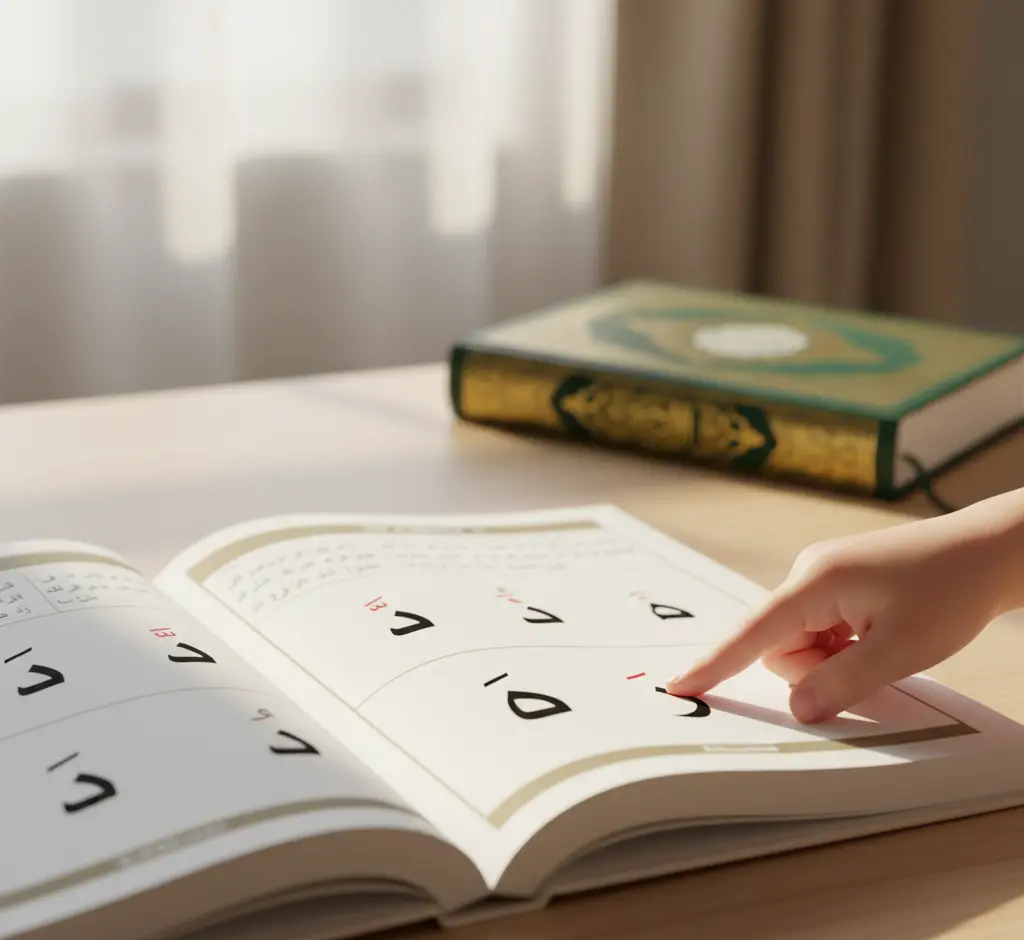
Have you ever opened the Quran, looked at the Arabic letters, and felt a quiet wish rise inside you, a wish to read every verse with confidence and beauty? Many of us start our journey exactly like this. We see the Arabic alphabet letters, their shapes and sounds, and something in our heart whispers that this is the language Allah chose for His final revelation. It feels sacred. It feels personal. And it feels like a journey worth taking.
I have seen adults begin this journey with trembling hands. I have seen children smile proudly when they finally pronounce a difficult letter. I have seen busy parents wake up before Fajr just to revise their Quran alphabet pronunciation. These moments remind me that learning the Arabic alphabet for Quran is not just about reading. It is an act of worship and a doorway into a lifelong relationship with the book of Allah.
So if you are beginning, or returning, or trying again after years, know that this path is blessed. And it is absolutely possible for you. Let us walk through it together, step by step, with clarity and heart. If you are starting late, we have a separate article asking can adults learn Quran from scratch to ease your worries.
Why Learning the Arabic Alphabet Matters Today
We live in a world of distractions. Notifications keep buzzing. Work keeps piling. Kids need attention. Life rarely slows down on its own. In the middle of this rush, many Muslims feel a deep longing to reconnect with the Quran. They want to understand it, recite it properly, and feel the sweetness of every verse. And that journey begins with something very simple, the Arabic alphabet.
These Arabic alphabet letters are the foundation of Quran recitation. They carry the sound, the rhythm, the flow, and the beauty of every surah. Without learning them properly, Tajweed becomes difficult, recitation becomes unclear, and the connection to meaning becomes thin.
Many beginners also carry doubts. They ask how to learn the Arabic alphabet for beginners or how to learn the Arabic alphabet easily. They wonder if there is an easy way to learn the Arabic alphabet or how long it takes. Some worry about age. Some worry about pronunciation.
Let me assure you, I have seen people of every age learn. I once taught an elderly man who practiced a single letter for three days until he mastered it. When he finally pronounced it correctly, tears filled his eyes. He said, “I feel like Allah has opened a door for me”. This is why the process matters. It is spiritual before it is technical. It is spiritual before it is technical. For specific adult guidance, explore the benefits of online Quran classes for adults and kids.
Understanding the Arabic Alphabet for Quran, The Basics
Before you begin, it helps to truly understand what the Arabic alphabet is. Many beginners assume it is similar to English, like an Arabic alphabet a to z chart. But Arabic is unique. It flows right to left. Letters change their shape depending on where they are in a word. Some letters connect. Some do not. Here is what you need to know in a simple, loving way. To understand the deeper structure of the language, consider the importance of Quranic Arabic grammar understanding.
1. Arabic Alphabet Letters and Their Sounds
There are 29 Arabic alphabet letters. Each has a specific sound that does not change. These sounds come from different parts of the mouth, throat, and tongue. Some are soft. Some are heavy. Some are deep. Some are airy.
For example:
- Alif (الف) is a simple open sound.
- Qaaf (ق) comes from deep in the throat.
- Saad (ص) has a strong, heavy sound.
- Haa (ھ) is gentle and airy.
When learning the Arabic alphabet for Quran, you are not only memorising shapes, you are discovering new sounds that do not exist in English. This is why the Quran alphabet English learners sometimes struggle at first, because your mouth has to learn a new skill. And that is completely normal.
2. Shapes in the Arabic Alphabet Words
Each letter has up to four shapes. One shape at the beginning of a word. One in the middle. One at the end. And one on its own. This might seem confusing, but once you practice, it becomes very natural.
For example:
- Baa (ب) looks different when it stands alone.
- It stretches slightly when it connects at the start.
- It adjusts again in the middle.
- And it settles into a final shape at the end.
When you learn Arabic alphabet words and study how letters join together, you start seeing the Quran with new clarity. Words no longer look like a mystery. They start to become familiar friends.
3. Arabic Alphabet Numbers, The Hidden Counting System
Many learners are surprised to discover that Arabic letters have numerical values as well. This is called the Abjad system. While it is not required for Quran recitation, it helps you appreciate how the Arabic alphabet has its own history of mathematics and linguistics.
Although these Arabic alphabet numbers are not essential for beginners, they help you understand the deep structure of the language Allah chose.
A Simple Roadmap, How to Learn the Arabic Alphabet for Beginners
Now let us walk through a practical, gentle method. If you follow these steps regularly, you will begin reading the Quran sooner than you think.
Step 1, Meet the Letters Slowly and Softly
Do not rush. Spend time with each letter. Listen to a teacher or a Quran tutor pronounce it. Repeat it. Feel where the sound comes from. Is it the throat? The tongue? The front of the mouth? The back?
This is the heart of Quranic alphabet Tajweed. Tajweed is not decoration. It is clarity. It is articulating each letter as the Prophet ﷺ taught.
You can start by practicing five letters a day, focusing on both their shape and sound.
Step 2, Focus on Mouth Position and Pronunciation
Many people ask for the easy way to learn Arabic alphabet sounds. The truth is, the easiest way is not a shortcut, it is correct guidance.
A teacher once told me, “If your tongue is in the right place, the letter will come out beautifully.”
Throat letters like
Hamza, Haa, Ayn, Ghayn, Khaa
require special care.
Tongue letters like
Laam, Noon, Raa
need controlled movement.
Heavy letters like
Saad, Daad, Taa, Zaa
need the back of the tongue to rise slightly.
This is where learning Arabic language for Quran becomes a soulful practice, because you are training your body to honour the words of Allah.
Step 3, Practice Connecting Letters
Once you know the shapes, start practicing Arabic alphabet words. Write small words like:
Baab
Hubb
Noor
Malak
Seeing how letters change shape inside a word builds your visual memory. It is one of the most overlooked steps in how to learn the Arabic alphabet.
Step 4, Learn with Real Quran Examples
This step is powerful.
Take a short surah like Surah Al Ikhlas. Look at individual words. Identify each letter. Say it slowly. Connect the letters. Then recite the full word.
For example:
Qul
Huwa
Ahad
This ties together everything you learned.
Step 5, Daily Recitation Practice
Even if it is five minutes. Your tongue needs repetition. Your ears need repetition. Your eyes need repetition. This is where the Arabic alphabet for Quran starts entering your heart and memory.
Step 6, Use a Teacher or Online Quran Class
I have seen countless students try to learn the Arabic alphabet alone. Some succeed. Many struggle. When you learn from a certified Quran teacher, you avoid mistakes that can linger for years.
Teachers help you fix pronunciation, recognise patterns, practice Tajweed, and build confidence.
A Deeper Look, Common Mistakes and How to Avoid Them
1. Memorising Without Listening
Some learners memorise Arabic alphabet letters visually but never train their ears. The Quran is recited, not only read. Listening brings life to the letters.
2. Ignoring Tajweed Early On
Many think Tajweed is advanced, but Tajweed begins with the alphabet. If you learn the letters incorrectly, every surah becomes harder later.
3. Rushing the Process
Do not compare yourself to others. Everyone learns differently. You only need consistency.
4. Relying on English Pronunciation
The Quran alphabet pronunciation cannot be fully captured in English sounds. English cannot express letters like Ayn or Qaaf correctly. So avoid depending on English transliteration.
Helping Children, The Arabic Alphabet for Kids
Teaching children is a blessing. Their tongues are flexible. Their hearts are open. But they also need gentleness.
Here are simple tips:
- Give them colorful charts.
- Make letters into fun stories.
- Use simple Arabic alphabet a to z style posters even though Arabic does not follow this pattern.
- Let them trace the letters with their fingers.
- Let them listen to slow recitation.
- Use short Arabic alphabet words like Ali, Bait, Noor, Qalam.
And most importantly, celebrate every small achievement. I once taught a little girl who used to mix Baa and Taa. One day she said them correctly. Her face lit up like Eid morning. Children grow quickly when they feel loved during the learning process.
Spiritual Benefits of Learning the Arabic Alphabet for Quran
This journey is not only technical. It is spiritual in every sense. When you learn a letter, you are learning the building block of the speech of Allah. When you pronounce a sound correctly, you mirror the recitation of the Prophet ﷺ. When you read a single word, angels witness your effort.
The Prophet ﷺ said that the one who reads the Quran with difficulty receives two rewards. So even if the Arabic alphabet feels challenging right now, remember that your effort is beloved to Allah.
Every time you sit with your Mushaf, you are not just studying. You are worshipping.
Frequently Asked Questions
1. How long does it take to learn the Arabic alphabet for Quran?
With consistent practice, most learners master the letters within four to eight weeks. Children may take a little longer, but they pick up sounds faster.
2. Can I learn the Arabic alphabet easily without a teacher?
You can learn the basics, but pronunciation usually needs correction. A teacher ensures you learn correctly from the start.
3. Is there an easy way to learn the Arabic alphabet quickly?
The easiest way is steady practice, correct listening, and regular guidance. There are no shortcuts, but the journey becomes beautiful when taken slowly.
4. Do Arabic alphabet numbers matter for Quran?
They are interesting historically but not necessary for recitation.
A Soft Closing Reflection
If you are standing at the beginning of this journey, unsure where to start, know that you are in a blessed place. Every letter you learn will bring you closer to Allah. Every sound you practice will polish your heart. Every word you read will increase your light.
Learning the Arabic alphabet for Quran is not just an educational step. It is a spiritual awakening. It is your heart saying to Allah, “I want to know Your words more intimately.”
May Allah make this path easy for you.
May He fill your tongue with beauty, your mind with clarity, and your heart with the sweetness of His book.
May every letter you learn become a witness for you on the Day of Judgement. After mastering the letters, the next great spiritual goal you may pursue is learning how to start Hifz at home.
Ameen.