
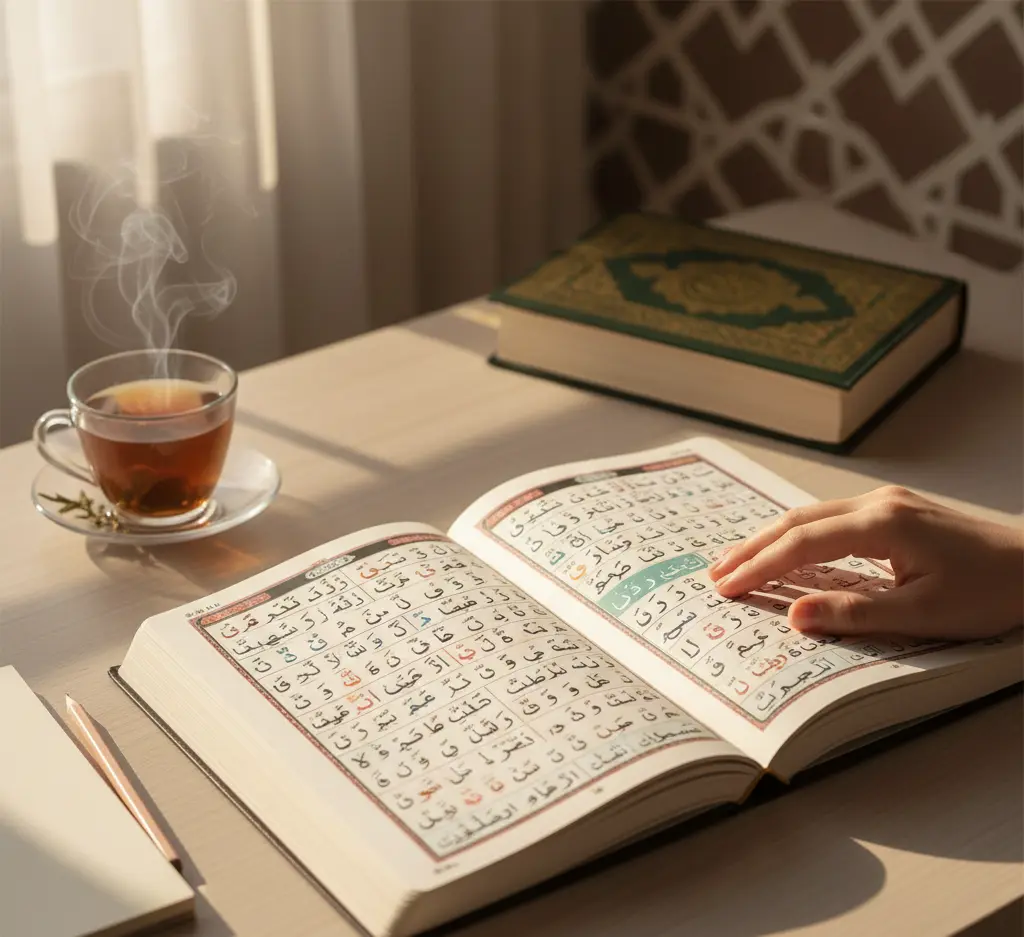
Noorani Qaida for Beginners, Importance of starting with Qaida; steps to learn.
If you have ever wished to read the Quran with clarity and confidence, you have probably heard teachers mention the Noorani Qaida. Almost every child who grows up learning the Quran begins with it. Many adults returning to their study of Quran reading begin with it as well. It is simple, structured, and designed to open the door to recitation in the most beautiful way.
I still remember the first time I saw a student open a Noorani Qaida. He was a grown man with a humble smile. He looked at the first page, at the Arabic letters, and whispered, “I feel like I am starting my life over, but in the best way.” That moment stayed with me, because the Noorani Qaida really is a new beginning. It teaches you how to read the Quran from the roots, slowly and gently, until the words of Allah become clear and familiar. Let us explore what it is, why it matters, and how you can learn it step by step with ease. For anyone with self-doubt, know that can adults learn Quran from scratch is not just possible, it is blessed.
Why Beginners Start With Noorani Qaida
Learning to read the Quran is not only about memorising letters. It is about understanding how those letters behave. How they connect. How their sounds change with different signs. How Tajweed rules flow naturally in real recitation. The Noorani Qaida is designed to teach all of this in the simplest way.
Here is why it is so important for beginners.
1. It Builds a Strong Foundation
The Noorani Qaida starts from the very beginning. It introduces Arabic letters one by one, then slowly teaches how to join them. Instead of overwhelming learners, it guides them gently so the mind absorbs everything naturally.
2. It Makes Tajweed Easy Later
Many beginners think Tajweed is difficult. But when you start with Noorani Qaida, Tajweed becomes natural because the rules are woven into the early lessons. You do not even realise you are learning them, but your recitation becomes accurate and clear.
3. It Helps Children and Adults in the Same Way
Parents often worry whether their children will understand it. Adults worry if it is too childish. But the beauty of the Qaida is that it suits everyone. It has helped generations of learners, from young children to elderly beginners.
4. It Removes Fear and Builds Confidence
When a student finishes the Noorani Qaida, they feel proud. The Quran no longer looks confusing. The words begin to make sense. Their recitation becomes smoother, and they feel ready to explore Surahs with courage. This sense of achievement is one of the key benefits of online Quran classes for adults and kids.
What Noorani Qaida Teaches You
To truly appreciate it, you need to understand what is inside it. Each lesson is carefully designed to build a specific skill.
• Arabic Alphabet and Pronunciation
It starts with single letters. Not just their shapes but their proper sounds. You learn how to pronounce letters from the throat, chest, tongue, and lips. This is the root of all Quran recitation.
• Letter Connection
Once you learn individual letters, the Qaida teaches you how they change shape when they join a word. This is where many beginners struggle, but the Qaida makes it simple through gradual practice.
• Harakat (Short Vowels)
You learn how a letter’s sound changes with Fatha, Kasra, and Damma. This is one of the most important steps because it brings life to the letters.
• Sukoon and Jazm
You learn how to stop on a letter without adding a vowel. This strengthens your rhythm and fluency.
• Madd (Stretching Sounds)
The Qaida teaches where to elongate sounds and how long to stretch them. This makes your recitation smoother and more beautiful.
• Tanween and Heavy Letters
Light letters. Heavy letters. Nose sounds. All of these are embedded inside the lessons so that Tajweed becomes natural.
By the time you finish the Noorani Qaida, you are not just reading Arabic. You are reading with the structure that prepares you for fluent and accurate Quran recitation.
How to Learn Noorani Qaida for Beginners, Step by Step
Many learners ask how to begin or how to progress. They wonder whether they should learn alone or with a teacher. They worry if they are too old or too busy. Let me guide you through a gentle step by step method.
Step 1, Begin With the Alphabet Slowly and Clearly
Focus on the first lesson. Listen carefully to the pronunciation of every letter. I always tell students, “If you learn the sounds correctly now, your recitation will stay clean forever.” Repeat each letter several times. The goal is familiarity and comfort.
Step 2, Learn to Recognise Letter Shapes
Arabic letters change depending on where they sit in a word. Some connect only from one side. Some connect both ways. The Qaida shows you these forms gradually. Spend time recognising them. Do not rush this stage.
Step 3, Practice Joining Letters
After learning individual letters, you begin joining two letter words. Then three letter words. This is the moment many learners begin to feel excitement. You start seeing actual Quran-like words form before your eyes.
Step 4, Learn Short Vowels and Apply Them
Fatha, Kasra, and Damma will transform your reading. Instead of reciting flat letters, you begin reciting real sounds. Practice these every day until your tongue feels comfortable.
Step 5, Move to Sukoon and Stretching Rules
The next lessons teach you when to stop, when to continue, when to stretch, and how long to stretch. These lessons shape your rhythm and prepare you for fluency.
Step 6, Read Larger Words Slowly
As you progress, the Qaida introduces longer words with mixed rules. Read them slowly. Do not worry if you make mistakes. Your tongue will learn with repetition.
Step 7, End With Simple Quranic Verses
The final pages of many Noorani Qaidas include actual verses from the Quran. This is where you finally taste the result of your learning. You recite with confidence, clarity, and joy.
Why Learning the Noorani Qaida With a Teacher Makes a Difference
Although the Qaida looks simple, a teacher’s guidance changes everything. A teacher helps you avoid mistakes in pronunciation and rhythm. They correct your tongue placement, your breath, your elongation, and your clarity.
I once taught a sister who learned the Noorani Qaida alone through a phone app. Her reading was fluent but her pronunciation was off by small details that changed the meaning. With guidance, she improved quickly. She later told me, “I wish I had started with a teacher from the beginning.”
A teacher also provides structure, encouragement, and accountability. And when you start reading Quran directly after the Qaida, your progress becomes smoother.
For Parents, Helping Children Learn Noorani Qaida
If you are teaching your child, here is what truly helps:
Keep lessons short and enjoyable.
Use colourful Qaida books.
Let them trace letters with their fingers.
Celebrate their progress.
Do not scold them for mistakes.
Let them listen to slow recitation.
Be patient, because children learn through repetition and love.
I once saw a child who refused to learn the Qaida because he felt scared. His mother later changed her approach by using kind words and gentle encouragement. Within a month, he became excited to open his book every day.
Children respond to warmth more than instruction.
Common Struggles and How to Overcome Them
Struggle 1, Mixing Similar Letters
Many beginners mix letters like
Saad and Seen
Daal and Thaal
Haa and Ha
Solution, Use mirrors, place your finger on the throat or tongue to feel where the sound comes from.
Struggle 2, Rushing the Pages
Beginners often flip quickly because the pages look simple.
Solution, Slow down. Master one page before moving on. This will save you time in the long run.
Struggle 3, Forgetting Previous Lessons
Solution, Review five minutes daily. Even revising old pages builds fluency.
Struggle 4, Feeling Discouraged
Solution, Remember that Quran learning is a journey. Allah rewards every effort, even the small ones.
Finishing the Noorani Qaida, What Comes Next
When you complete the Qaida, you are ready to read the Quran from the Mushaf. Many students begin with Surah Al Fatiha, then Juz Amma. Some begin with Surah Al Baqarah. It depends on the teacher.
This is where recitation becomes deeper. Tajweed becomes meaningful. And the beauty of the Quran begins to open in new ways.
A Soft Closing Reflection
The Noorani Qaida is not just a beginner’s book. It is a doorway. It is the first gentle touch of Quran learning. It takes your hand slowly and prepares your heart and tongue for the sacred words of Allah.
If you are opening it for the first time, or helping your child open it, or returning after years, know that you are beginning something blessed. The Quran is a gift from Allah, and the Noorani Qaida is your first step toward receiving that gift fully.
May Allah make this journey easy for you.
May He place light in your recitation, patience in your practice, and sweetness in every page you read.
May your heart grow softer with every lesson, and may the Quran become your lifelong companion. If your ultimate goal is memorization, you can apply these foundational skills immediately by learning how to start Hifz at home.
Ameen.